
Why Play-Based Learning Is More Powerful Than Worksheets
Home / School / Why Play-Based Learning Is More Powerful Than Worksheets
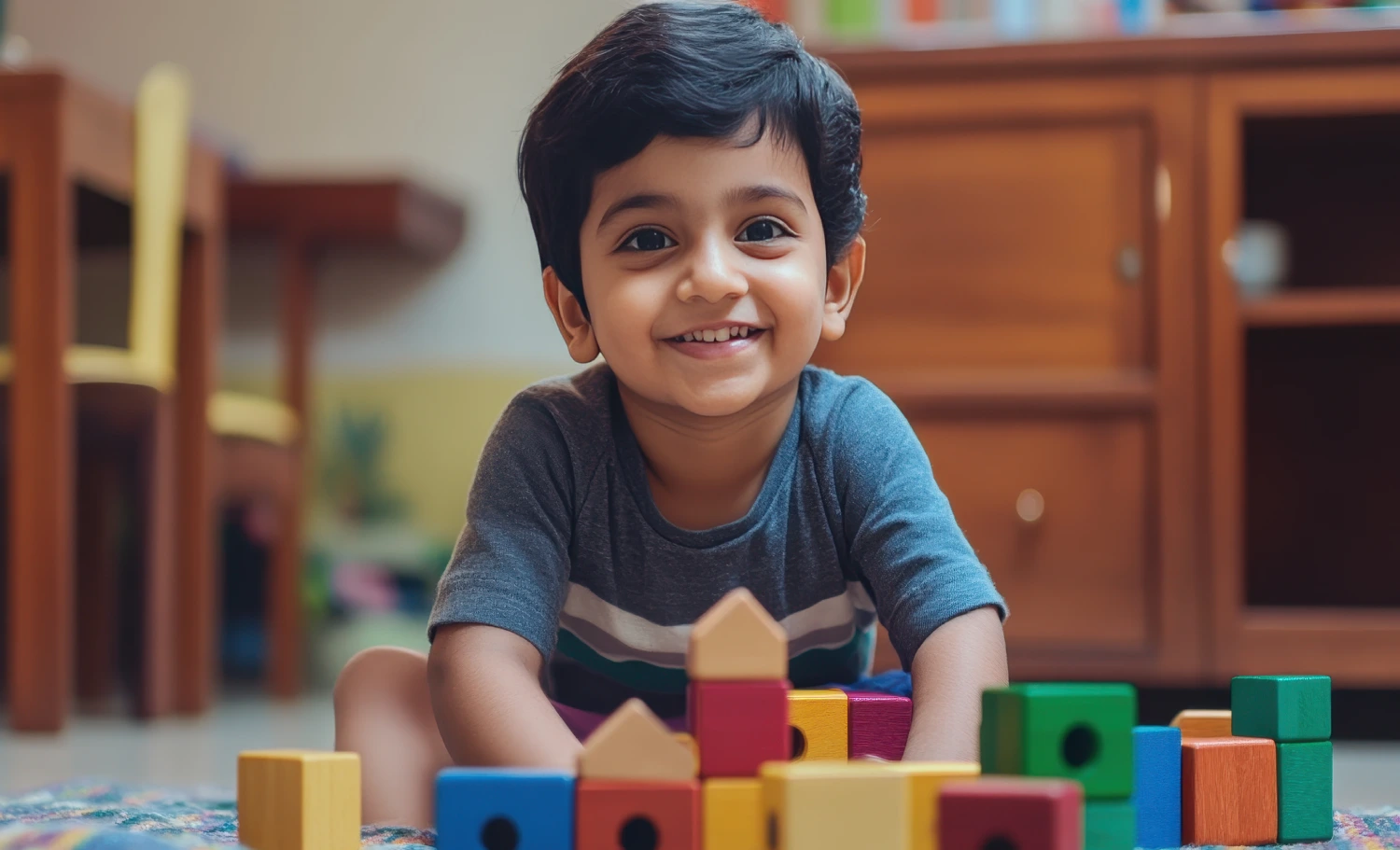
There is something quietly powerful about watching a four-year-old play with blocks and build a tower. This is not mere playing. This is all about learning. So let your child play.
Your child learns more on the floor than at a desk. Building a tower from blocks teaches your child how to be determined to complete the task and accept the mistakes when it falls. A worksheet cannot provide this learning.
Parents searching for pre-nursery schools in Takka Panvel often ask about reading readiness, handwriting practice, early math skills. Those things matter. Of course they do. But what truly shapes a young child is not the worksheet neatly completed inside a folder. It is what happens when learning feels like play.
And yes, that difference is bigger than it sounds.
When Learning Feels Like Joy, Not Pressure
A worksheet asks for the right answer.
Play asks for curiosity.
There is a difference. A child filling circles with crayons may finish the page. But a child pretending the crayon is a rocket, drawing planets and inventing stories along the way, is building imagination, language, and emotional confidence all at once.
Strangely enough, many adults underestimate how serious play actually is.
Through play, children experiment. They negotiate roles in pretend kitchens. They decide who will be the doctor, who will be the patient. They learn patience when waiting for a turn on the slide. These are not small lessons. They are foundations for life.
The finest pre-nursery schools in Takka Panvel understand this deeply. They design classrooms where children move, question, explore, and sometimes make a mess. Real learning is rarely neat.
The Brain Grows Faster When Hands Are Busy
Once, it was observed that a group of children was trying to fit puzzle pieces together. One child kept forcing the wrong piece into place. Another gently said, “Turn it.”
That tiny exchange? It was problem-solving. Social interaction. Communication. Cognitive flexibility.
When children manipulate objects, build structures, or pour water from one cup to another, the brain forms stronger connections. Worksheets mostly engage the eyes and fingers. Play engages the whole body.
That is why the best preschools in Panvel are slowly shifting away from rigid desk time. They are creating sensory corners, storytelling spaces, and open-ended play zones. Because a child who experiments freely develops sharper thinking skills than a child who only traces lines.
And honestly, you can see the difference.
Children who learn through play-based interaction speak with more confidence. They ask better questions. They recover faster from small failures.
Worksheets Teach Answers. Play Teaches Thinking.
This part deserves attention.
Worksheets often focus on memory. Match this to that. Circle the correct letter. Fill in the blank.
Useful? Yes.
Enough? Not really.
Play invites decision-making. It allows mistakes. It builds resilience. A child constructing a sandcastle must adjust when the sand collapses. That adjustment builds flexible thinking.
In many pre-nursery schools in Takka Panvel, teachers now observe instead of interrupt. They guide gently instead of correcting instantly. This space allows children to think independently.
For a moment, I thought structure might disappear in such settings. It does not. Structure simply becomes softer and more intelligent.
Emotional Strength Is Built Between Giggles
There is something beautiful about shared laughter in a classroom.
When children act out stories, care for toy animals, or play shopkeeper, they practise empathy. They understand feelings. They sense fairness.
No worksheet can truly teach kindness.
Play allows children to experience small conflicts and resolve them. “You took my block.” “Let us share.” These tiny negotiations are rehearsal for adulthood.
Parents often worry that too much play means less discipline. But discipline born from understanding lasts longer than discipline imposed by fear.
The finest pre-nursery schools in Takka Panvel place as much emphasis on emotional intelligence as on alphabet recognition. Because children who feel secure learn faster. It is that simple.
The Confidence You Cannot Measure on Paper
There is a quiet confidence that grows when a child completes something self-directed. A cardboard spaceship. A dramatic puppet show. A pretend restaurant with handwritten menus.
No red marks. No grading. Just pride.
When learning feels self-driven, children associate school with excitement instead of anxiety. This early association shapes their long-term attitude toward education.
Parents visiting pre-nursery schools in Takka Panvel often notice which classrooms feel alive. The difference is not decoration. It is energy. It is children moving with purpose. They are talking, creating, and trying again. And that energy carries forward into higher classes.
Should Worksheets Disappear Completely?
Not necessarily. Worksheets can support practice. They can reinforce skills. But they should never replace exploration.
Young children are not designed to sit still for long stretches. Their brains crave interaction, movement, and sensory engagement. When a child builds a tower with blocks, pours sand from one cup to another, or pretends to run a small shop in the classroom, the brain is working hard. It is measuring, comparing, planning, speaking, listening, and solving problems. None of this looks like a formal lesson, yet it builds strong foundations.
When schools rely only on paper tasks, learning becomes mechanical. Children begin to associate school with repetition instead of discovery. When schools embrace play-based learning, learning becomes meaningful. Concepts are experienced, not memorised. That shift matters because early childhood is not about finishing a syllabus. It is about shaping curiosity, confidence, and social skills.
Parents searching for pre-nursery schools in Takka Panvel are beginning to ask different questions now. They are not worried about whether their child can write A to Z within a few months. They want assurance that their child feels safe and happy. They want to know whether their child learns to ask questions, make friends, solve small conflicts, and come home excited to share stories from the day. Emotional growth, communication skills, and independence are becoming equally important.
This is where institutions like MNR Golden Kids, the best preschool in Navi, Mumbai, stand apart. The focus is not limited to worksheets or early writing drills. Classrooms are designed to encourage movement, interaction, and hands-on activities. Teachers guide children through storytelling, music, art, group games, and structured play that quietly introduces numbers, letters, and everyday problem-solving. Learning happens naturally because it is woven into experiences.
Play is not a break from learning. It is learning. Through play, children understand teamwork, patience, creativity, and resilience. They test ideas, make mistakes, and try again without fear. And when a school truly understands that balance, childhood remains joyful while education becomes powerful and lasting.
Related Blogs
How The Best Pre-nursery School in Koproli Helps Children Build Confidence from Day One
The first morning at one of the best pre-nursery school in Koproli is a small…
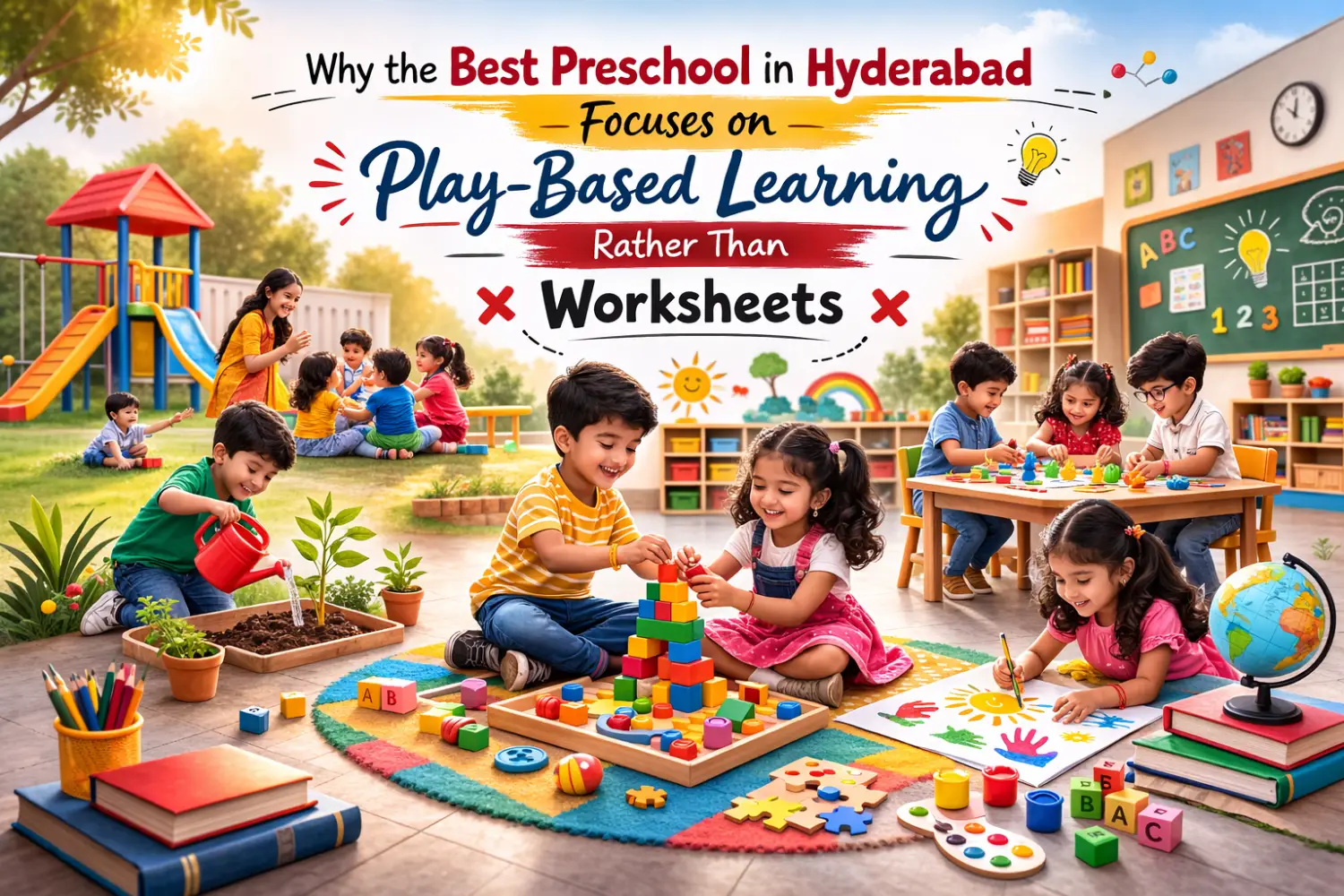
Why the Best Preschool in Hyderabad Focuses on Play-Based Learning Rather Than Worksheets
There is something special about watching a young child build a tall tower with…
Deep-Rooted Issues of Pre-Primary Education in India: How the Top Preschool in Sangareddy Makes a Healthy Pre-Primary Learning Environment!
Across India, early childhood education is slowly receiving the attention it deserves. According to national…
How Group Activities at the International-Standard Preschool in Panvel Help Nursery Kids Learn Teamwork Early
Walk into a lively nursery classroom at one of the best international-standard preschool in Panvel,…
The Gentle Strength of Daily Routine: How Simple Habits Help Young Minds Grow Strong
There is a quiet joy in watching a child follow a daily pattern with confidence….
The Quiet Power of Routine: How Simple Daily Rhythms Shape Your Child’s Growing Brain
There is something deeply reassuring about watching a child know what comes next. The small…