
How The Top Nursery School In Kukatpally Teaches Problem-Solving Skills to The Children!
Home / School / How The Top Nursery School In Kukatpally Teaches Problem-Solving Skills to The Children!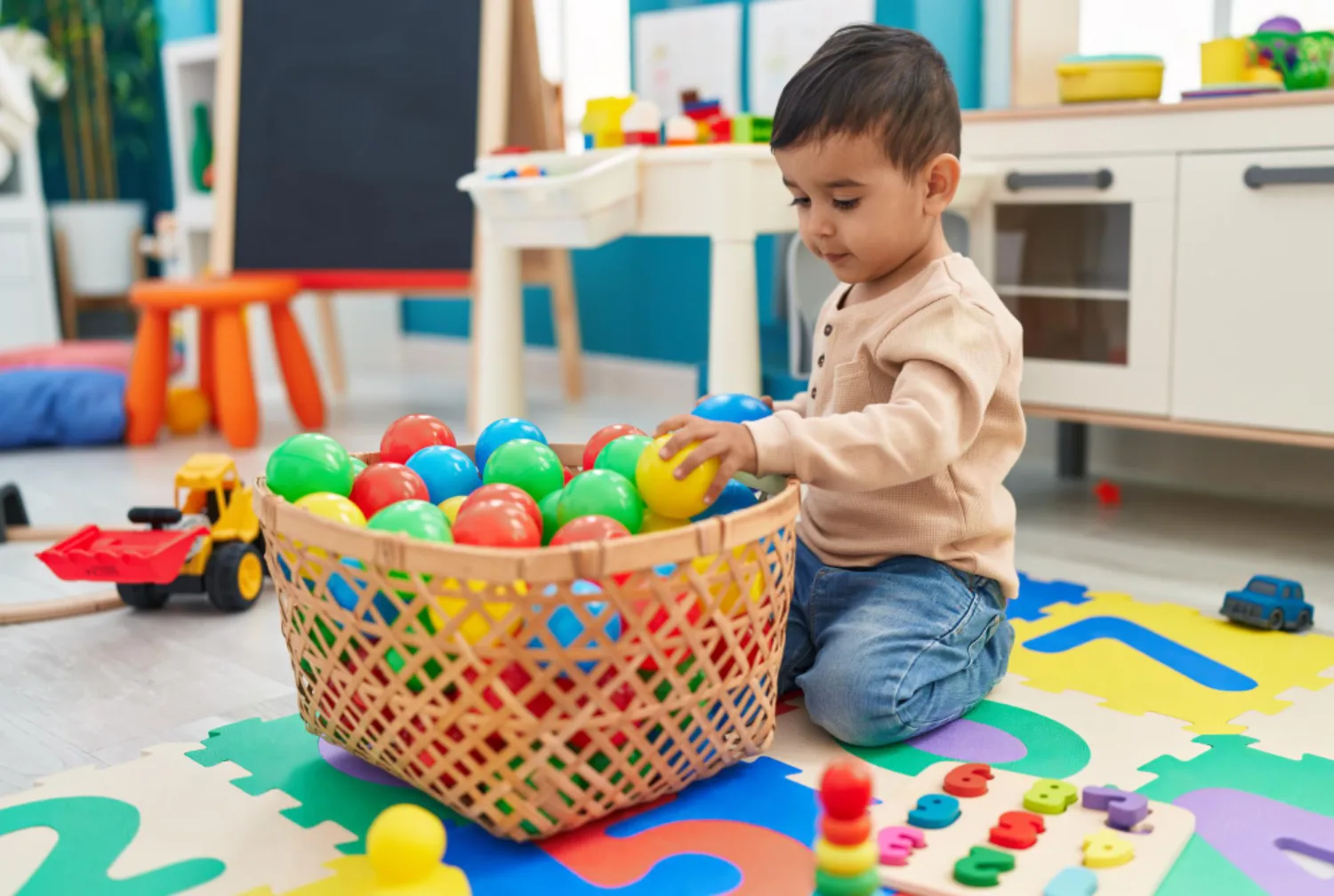
Early childhood education has begun to receive serious attention across India. Recent early learning studies suggest that nearly eighty percent of brain development happens before the age of eight. This period shapes how children think, observe, and respond to challenges.
Many parents now look beyond alphabets and numbers when selecting a preschool. They want their children to develop thinking ability, curiosity, and confidence. This shift explains why many families search carefully for the top nursery school in Kukatpally, where young learners are encouraged to explore ideas, solve small problems, and learn through everyday experiences rather than memorising answers.
In such classrooms, learning often begins with play. A toy that rolls away, a puzzle that does not fit, or two children reaching for the same block can quietly become powerful learning moments.
What Does Problem-Solving Really Mean For Preschool Children?
Adults sometimes imagine problem-solving as a complicated skill linked to mathematics or logic. In early childhood education, the meaning is much simpler and far more practical.
Problem-solving means the ability to notice a challenge, think about possible solutions, try one idea, and adjust when the first attempt does not work.
For a preschool child, examples appear throughout the day:
- Finding the correct puzzle piece that fits into the board
- Deciding how to share crayons during drawing time
- Building a block tower that keeps falling
- Figuring out how to move a toy stuck under a table
Teachers at MNR Golden Kids in Hyderabad, the best-known top nursery school in Kukatpally, observe that children naturally attempt different solutions when they are given time to think. One child may rotate a puzzle piece several times before it fits. Another child may try stacking blocks in a wider base after a tower collapses.
These small experiments quietly train the mind to analyse situations and respond thoughtfully.
Why Do Preschool Years Shape Thinking So Strongly?
The early years of life are a period of remarkable brain growth. During this stage, the brain forms millions of neural connections. These connections strengthen whenever children explore, ask questions, or interact with their surroundings.
Teachers at the top nursery school in Kukatpally often notice something interesting during classroom activities. A child who struggles with a puzzle during the morning session may quietly return to the same puzzle after lunch and solve it independently. That moment shows the power of persistence.
Confidence begins to grow when children realise that they can discover solutions on their own.
Several experiences in preschool support this development:
- Exploring toys and objects through touch and movement
- Asking questions during storytelling sessions
- Working with building blocks and construction toys
- Observing nature during outdoor play
- Interacting with classmates during group activities
These experiences strengthen both thinking ability and emotional confidence.
How Does The Top Nursery School In Kukatpally Teach Problem-Solving Skills?
Problem-solving is rarely taught through lectures in early childhood classrooms. It grows naturally through playful learning situations that encourage curiosity and experimentation.
Educators at MNR Golden Kids in Hyderabad, popularly known as the top nursery school in Kukatpally, often use the following methods.
-
Open-Ended Play Activities
Children learn best when activities allow multiple possibilities rather than fixed instructions.
Some examples include:
- Building structures using blocks or construction toys
- Drawing freely with colours and art materials
- Creating shapes with clay or dough
- Designing simple patterns using beads or tiles
During these activities, children test ideas, adjust their approach, and discover new possibilities.
-
Guided Questions Instead Of Direct Answers
Teachers do not immediately solve every challenge for students. Instead, they gently guide thinking through questions.
Common classroom prompts include:
- What do you think will happen if we try this way?
- Can we find another block that is stronger?
- How can two friends share the same toy?
- What might happen if the base becomes wider?
This questioning method helps children analyse situations before acting.
In many classrooms of the top nursery schools in Kukatpally, teachers quietly observe children discussing solutions among themselves. Sometimes the most thoughtful answers come from the children themselves.
-
Everyday Classroom Experiences
Learning does not always happen during formal activities. Daily routines also help children develop problem-solving skills.
Preschool teachers often use simple tasks such as:
- Arranging books on classroom shelves
- Organising toys after playtime
- Watering plants in the garden area
- Helping classmates during group projects
These real-life tasks teach children how to think practically and work together.
During a recent classroom activity, a group of children tried to build a small bridge using wooden blocks. The first design collapsed almost immediately. After a short pause, one child suggested placing wider blocks at the bottom. The next attempt remained stable much longer.
Moments like these show how thinking grows naturally when children feel safe to experiment.
How Do These Skills Help Children Later In School?
Problem-solving skills developed in preschool often influence future learning experiences. Children who practise thinking through challenges early tend to approach academic tasks with greater confidence later in school. When they face a difficult question, they rarely become discouraged. Instead, they try different strategies.
Teachers in renowned CBSE schools in Kukatpally frequently observe that students with strong preschool foundations adapt more comfortably to structured learning environments. They participate actively in group activities, presentations, and classroom discussions. The habit of thinking independently begins during those early preschool moments.
Why Learning Spaces Matter In Early Childhood
The environment of a preschool plays an important role in shaping children’s behaviour and thinking.
At MNR Golden Kids in Hyderabad, the best-known top nursery school in Kukatpally, classrooms are designed to encourage curiosity. Learning corners, play areas, reading spaces, and outdoor exploration zones allow children to move, observe, and experiment freely.
Teachers provide guidance, yet they allow children the time to think independently. Sometimes a child pauses quietly while trying to fix a block tower. A teacher may watch for a few seconds before stepping in. Often the child solves the challenge alone. Those small victories build confidence that lasts for years.
Over time, such experiences shape children who approach challenges calmly, think creatively, and believe that every problem can have a solution.
Follow us on Instagram
Related Blogs

10 Signs Your Child Needs More Social Interaction Before Formal Schooling
Starting school is a big milestone in every child’s life. While many parents focus on…
The Gentle Strength of Daily Routine: How Simple Habits Help Young Minds Grow Strong
There is a quiet joy in watching a child follow a daily pattern with confidence….
Working Parents in Hyderabad: How to Choose the Right Play School
Morning hours in Hyderabad move quickly. Office calls begin early, traffic builds up, and between…
The Food, The Feelings, The Future: A Simple Guide to Health & Nutrition for Kids!
There is something deeply moving about watching a child eat with joy. The messy fingers….

How to Choose the Best Nursery Schools in Mumbai for Your Child’s First Learning Journey
There comes a moment in every parent’s life when school discussions suddenly become real. One…
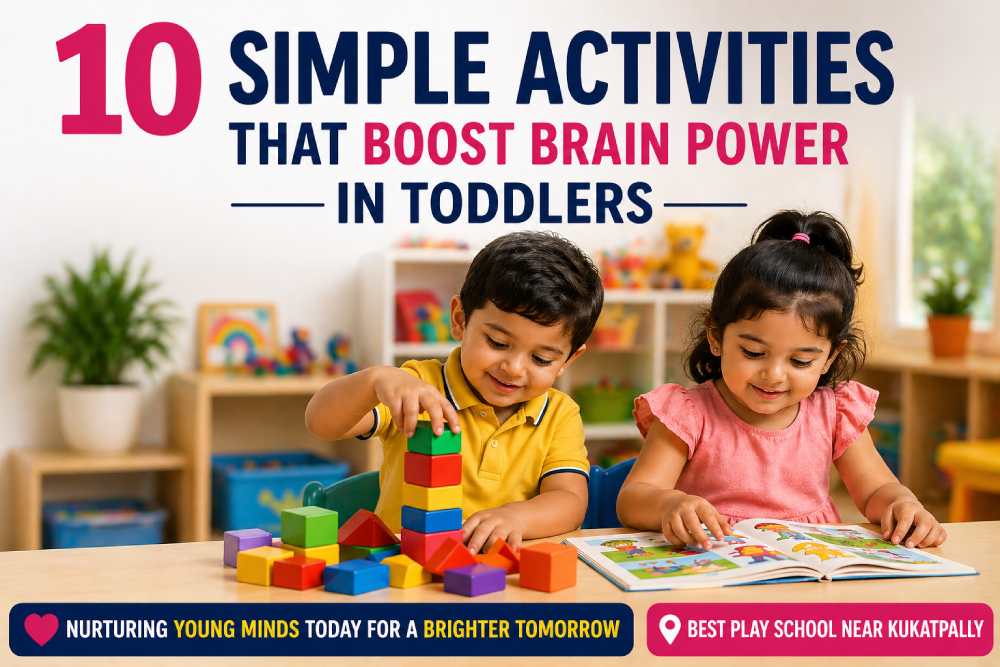
10 Simple Activities That Boost Brain Power in Toddlers
Today, parents are looking for schools for their children that are not only limited to…